Showing posts with label brick ties suppliers UK. Show all posts

Friday, 20 December 2019

Visual Signs of Wall Ties Failure


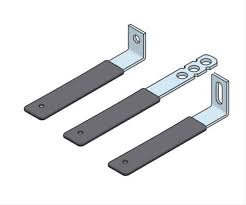
Ancon wall ties play an important role in the construction of any masonry. The job of the wall ties are to tie the visible outer cavity of the wall of the building to its structural and load bearing inner leaf. After a particular period of time, the wall ties corrode and thus its strength loosens up. In such a condition of wall tie failure, the inner as well as the outer leaf of the building become independent of each other. Thereafter, the building becomes structurally unsafe and can be danger for those who are in it and are around it. 
https://www.countysupplies.net/ancon-movement-tie---200mm-294-p.asp


This article focuses around the visual signs of damaged or corroded wall ties in the masonry walls. Take a quick look on these signs:

·         Vertical or horizontal cracks in brickwork: The vertical or horizontal cracks are normally caused due to corrosion of the wall ties. As the wall tie corrodes, the metallic oxide is produced that takes up more than the non-corroded wall tie would require. Thus the bricks that are placed above and below the wall ties are forced apart and therefore cracking the mortar bed. If this issues spread within your property, then you will ultimately notice that it will occur to every six course of the brick that is up to 450mm. 

·         Bulging Brickwork: Bulging brickwork can be seen in the areas where the corrosion of the wall ties and resultant expansion in the masses force the outer skin to either move up or down. If there is no space for the skin to expand, then the brickwork itself bulge outwards causing bulge. 

·         Cracks or Separation of Window Reveals: This is normally seen in the internal walls of the property. When the movement is happened, it causes gaps and cracking that can appear between the window frames and window reveals. In addition to it, the depth of the window reveal can also appear as consistent due to wall ties being corroded. 

·         Lintels lifting or sagging: Due to the wall ties being corroded, the expansion that occurs causes certain amount of movement. This can push up the lintels either upwards or downwards. This same can appear in the window sills. 

It is vital that you notice and take remedial actions for getting the masonry repaired. Today, ancon wall ties are being used in the construction of the building as there’s much increased resistance to rusting and corrosion.

Monday, 4 November 2019

Issues That Arise with Improper Placing of the Brick Ties


Wall ties which are sometimes referred to as brick ties are used at time of construction of the building with cavity walls. The brick ties are used for joining the two leaves of the cavity wall together and that allows the two parts to act as a homogeneous unit. The brick ties are hidden from the view of the construction. Thus, it plays an important role in ensuring the long term durability and stability of the masonry or building.

The brick ties which would be poorly installed or insufficient for the cavity walls would further lead to the extreme structural problems and that includes damp penetration, masonry wall cracks or even the collapse of the outer masonry leaf.

Here are some of the most common issues that arise with the usage of brick ties. Thus, the below article would help you in saving your masonry from collapsing. Go on and have a look!

·      Inaccurate spacing: The contractors place the Brick wall ties or brick ties wherever they find them to be convenient. This results in the attachment of the plywood or OSB sheathing. The contractors should have perfect knowledge regarding the space as in one tie per 2.67 feet of the wall area. Also the numbers can work with 16 or 24 inch of the stud spacing.

·      Poor nailing: In most of the masonries, it has been observed that the brick ties that are installed with the uncoated nails are susceptible to corrosion. While on the other hand the contractors use the roofing nails which do not penetrate the framing deeply. Thus, it is recommended that the contractors should always use at least 2.5 inch of the galvanized nail.

·    Upside-down ties: Most of the installers fasten all the ties in order to start the brick work. At that time, often the corrugated ties get folded. Thus, the ties get lined up.  And this upside-down tie can act as a spring under load. This can make the water slipping from the wall.

Wide gaps: The corrugated brick ties are only stiff enough when there’s at least 1 inch of the airspace in between. However, when the brick layers align on the top of it, it leaves 2 or 2.5 inches of the space. And even if the wall doesn’t fail, the brick then deform under wind load and this causes cracks.