Showing posts with label wall ties. Show all posts

Friday, 20 December 2019

Visual Signs of Wall Ties Failure


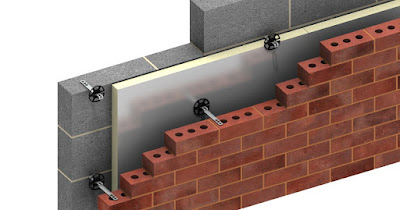
Ancon wall ties play an important role in the construction of any masonry. The job of the wall ties are to tie the visible outer cavity of the wall of the building to its structural and load bearing inner leaf. After a particular period of time, the wall ties corrode and thus its strength loosens up. In such a condition of wall tie failure, the inner as well as the outer leaf of the building become independent of each other. Thereafter, the building becomes structurally unsafe and can be danger for those who are in it and are around it. 
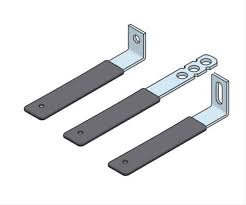
https://www.countysupplies.net/ancon-movement-tie---200mm-294-p.asp


This article focuses around the visual signs of damaged or corroded wall ties in the masonry walls. Take a quick look on these signs:

·         Vertical or horizontal cracks in brickwork: The vertical or horizontal cracks are normally caused due to corrosion of the wall ties. As the wall tie corrodes, the metallic oxide is produced that takes up more than the non-corroded wall tie would require. Thus the bricks that are placed above and below the wall ties are forced apart and therefore cracking the mortar bed. If this issues spread within your property, then you will ultimately notice that it will occur to every six course of the brick that is up to 450mm. 

·         Bulging Brickwork: Bulging brickwork can be seen in the areas where the corrosion of the wall ties and resultant expansion in the masses force the outer skin to either move up or down. If there is no space for the skin to expand, then the brickwork itself bulge outwards causing bulge. 

·         Cracks or Separation of Window Reveals: This is normally seen in the internal walls of the property. When the movement is happened, it causes gaps and cracking that can appear between the window frames and window reveals. In addition to it, the depth of the window reveal can also appear as consistent due to wall ties being corroded. 

·         Lintels lifting or sagging: Due to the wall ties being corroded, the expansion that occurs causes certain amount of movement. This can push up the lintels either upwards or downwards. This same can appear in the window sills. 

It is vital that you notice and take remedial actions for getting the masonry repaired. Today, ancon wall ties are being used in the construction of the building as there’s much increased resistance to rusting and corrosion.

Wednesday, 4 September 2019

Buy Stainless Steel Wall Ties for your Building

What are the ‘Wall Ties’?


Wall ties are usually referred to as brick ties, which are used in the masonries to fix the cavity walls. These are used to fix or bind the two leaves of a cavity wall together. This allows both the leaves to act to as homogenous unit. Therefore, wall ties play an important role as it ensures the long term stability of the masonry.

Insufficient or improper installation of the wall ties can further lead to the severe structural problems and that includes penetration, cracks in the walls of buildings and even the collapse of the outer masonry leaf. Wall ties are manufactured from materials which are corrosive and fire resistant. This also includes a drip formation that can prevent the passage of water to the inner leaf.

What is a wall tie design?

Since 1920, there are a large number of buildings being build that featured cavity walls. Over the years, the shapes of wall ties have gone under various changes and various materials are being used and these wall ties have now become obsolete, like plastic wall tie, galvanized steel. Before 1978, the wall ties were usually manufactured from galvanized steel. Those wall ties were expected to last a lifetime for the building. But one disadvantage was that it has then been recognized as that these wall ties can corrode after 15-20 years. Wall ties are strips or bars that are now made of steel that are used to fix the cavity internally and externally. Both the ends of wall ties are designed such that it locks tightly in the mortar.

What is the importance of stainless steel wall ties?

Now days, the wall ties are manufactured from stainless steel. Stainless steel wall ties are now available commercially that withstands corrosion from water and cement and it also doesn’t require additional protection. The modern stainless steel wall ties are maintenance free for life and these also reduce the cost of material content and are also valued by the engineers. Stainless steel wall ties are used to limit that risk of exposure to water and also save from the chemical attack from cement. 

Friday, 9 August 2019

Different Types of Brick Ties

 brick ties


Over the years, many different materials have been used to make brick ties. In large number of instances, the how old a properly is and its location will dictate the construction of its brick ties. Some common types are:

1 – Metal

At present, stainless steel is widely used but mild steel, copper, wrought iron and cast iron have traditionally been used. Wrought iron and cast iron brick ties are usually quite heavy, and in case of corrosion it should be removed in most cases. Copper brick ties are for the most part quite rare, but in fact they are very strong and durable.

2 – Brick or Terracotta

It is rarely and usually isolated in certain regions, says an online store that deals in brick ties. They also have several drawbacks as they create cold thermal bridges to the interior walls, allowing moisture and cold to pass through them.

3 – Stone or Slate

Once more, this is not common and has numerous drawbacks, including an inclination to breakage and cracking in the event of movement. Nevertheless, they are fairly corrosion-resistant and, if owned, where there is no sign of movement, they should last a long time. Again, however, this type of tie can transfer moisture and cold to the inner skin.

In most maximum properties dating back to the 1930s, mild steel is the element preferred for the manufacture of brick ties, and under normal circumstances, the mild steel used is left as it was (uncoated) or coated with a bitumen type material. As technology has emerged and recognition of rust and corrosion has progressed, galvanizing has become the preferred coating, providing the joints with an outer layer that is resistant to water and moisture to extend their service life.

How to Replace and Install Cavity Wall Ties

In the event that you notice visual cracks due to corrosion caused by brick ties, it may be beyond DIY. You are ought to seek help from a qualified civil engineer to assess and suggest the following steps. In this situation, corroded brick ties must be removed. This will be a highly qualified work that must be completed by a person with the abilities and experience essential to repair degraded brick ties so as not to cause additional architectural harm to property.